
Thank You Teachers: How Educators Shape Lifelong Learning at ORCA
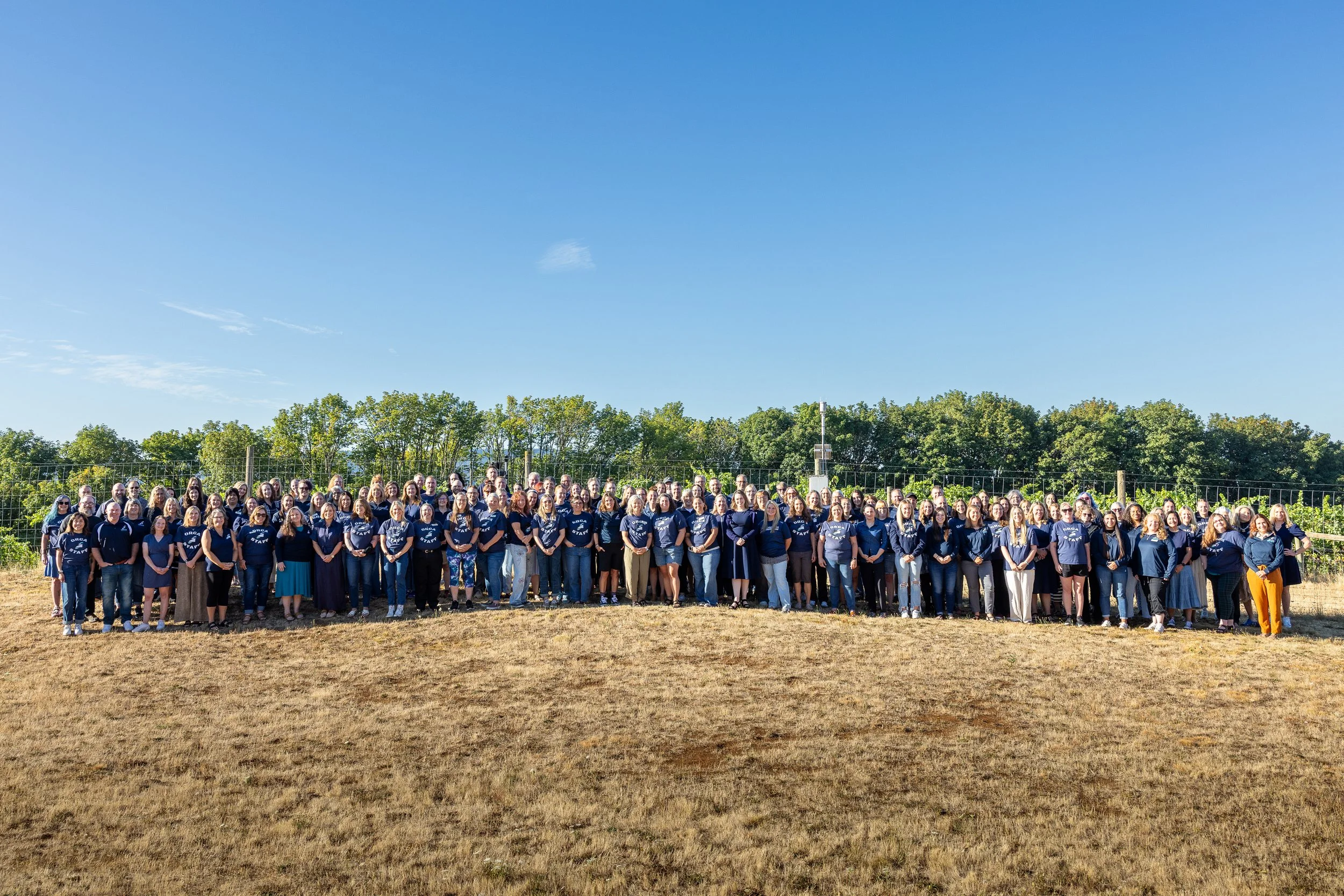
Great teachers do more than deliver lessons. They help students build confidence, discover their strengths, and feel supported as they grow.
At Oregon Charter Academy (ORCA), that connection is especially important. In an online learning environment, educators play a meaningful role in helping students feel seen, heard, and encouraged, whether they are participating in class, joining a club, preparing for college, or learning how to advocate for themselves.
In honor of Teacher Appreciation Week, we’re highlighting how ORCA educators connect with their students, support growth in an online learning environment, and inspire students to imagine something new for themselves.
Meeting Students Where They Are
ORCA’s curriculum gives teachers the flexibility to understand each student’s needs and build from there. The Advancement Via Individual Determination, or AVID, program is one area where this approach shines through. This elective helps middle and high school students focus on academic success and college preparation through foundational strategies such as focused note-taking, SMART goal-setting, and collaboration.
Melissa Halter, known to her Kindergarten students as Mrs. Halter, serves on ORCA’s AVID Site Team and models what it means to go above and beyond for students. Her classes are engaging and fun, while also giving students a safe space to participate, take risks, and build confidence in their learning.
Mrs. Halter also works hard to build strong relationships beyond the classroom. She maintains close communication with families and consistently works to build positive connections with both students and their families.
AVID is one example of what’s possible when teachers have the freedom to meet students individually. Through their teaching and leadership, educators like Mrs. Halter help students believe they can handle harder work, take on new challenges, and become the kind of learners they may not have imagined they could be.
Building Connections in a Virtual Environment
Academic growth is only one part of the student experience. In an online school environment, relationships and community also play an important role in helping students feel seen and supported.
Throughout our history, ORCA has prioritized fostering a culture of connection through synchronous classroom time, in-person events, and extracurricular activities.
Student clubs are a popular place for students and staff to connect around shared interests. Emily Strocher, an eighth-grade Humanities teacher, and Katherine Wallig, a sixth-grade Humanities teacher, team up to advise ORCA’s Middle School Writing Club. Students gather here every Wednesday to improve their writing by sharing their work and receiving feedback from other club members. Ms. Wallig and Ms. Strocher work together to keep the club a fun, interesting, and inclusive space for student collaboration.
“I feel like I've really gotten to know each person’s individual writing styles and personalities,” Ms. Strocher says. “Writing Club members are very supportive of each other's writing, always eager to give compliments and feedback, and also hop on the mic to read for other members when they can't or don't feel up to it.”
Ms. Wallig agrees. “I can truly say that the Writing Club meetings are one of my favorite parts of the week,” she says. “We have such a fun, creative, and collaborative group of students.”
The Middle School Writing Club is one of dozens of spaces where students and teachers connect outside of the classroom. Throughout the school year, students and teachers live out ORCA’s culture of connection to create a vibrant community of virtual learners.
Growing Confidence, Curiosity, and Independence
That sense of support can also give students the confidence to become more curious and independent learners.
One of the most satisfying moments for any teacher is watching a new idea catch fire in a student’s mind. For Hanna Morris, a middle school science instructor, it’s a favorite part of the job. “Science is all about asking questions, and when that interest clicks for a student, there is nothing better,” she says.
Catching that moment requires attention. Teachers must know their students well enough to recognize when they move from taking instruction to asking their own questions. ORCA’s model gives teachers the room to pay close attention as students work through the material.
When students take that big step, from passive learning into active exploration, they begin their journey toward becoming lifelong learners. The confidence students build along the way will stay with them long after their time at ORCA ends.
Teaching by Example: Modeling Lifelong Learning
Great teachers lead by example, showing their students not just what to learn but also how to learn. ORCA chemistry and physics instructor Mark Cralen provided an example of this principle after receiving a grant.
The grant allowed Mr. Cralen to work alongside undergraduates in the Stuarts Lab Group at Portland State University for two summers beginning in 2023. “It was really valuable for me to see the process of science play out firsthand,” Mr. Cralen says. “The lab experience has definitely changed the way I teach my course and empowered me to talk about science in a clearer way.”
While Mr. Cralen’s work in the lab didn’t achieve the objective he hoped for, it reinforced something he wants his students to understand. “Doing science is hard,” he says. “Generations of brilliant minds building on each other have pushed the edges of scientific knowledge very far. More brilliant minds than ever are continuing to push the edges of knowledge even farther.”
Not only did Mr. Cralen’s students benefit from everything he learned during those summers in the lab, but they also saw him do the difficult work of real science, then return to class ready to discuss it. Lifelong learning isn’t something ORCA teachers just talk about. It’s a standard they uphold for themselves every day, and their students notice.
Thank You, Teachers
To every ORCA teacher reading this: thank you. Thank you for meeting students where they are, catching that spark of understanding when it first appears, building relationships that matter, and modeling what lifelong learning looks like in the real world. You are the reason ORCA works.
If you’re a parent who’d like to learn more about ORCA, join us for an upcoming virtual information session to ask questions, preview our learning platform, and meet members of our staff.
We’d love the opportunity to show you how an ORCA education can help your student grow into a confident, lifelong learner.